Religion: An Integrated Practice
What the Pre-Christian North Suggests About What Religion Actually Is, and What Modern Religions Have Forgotten
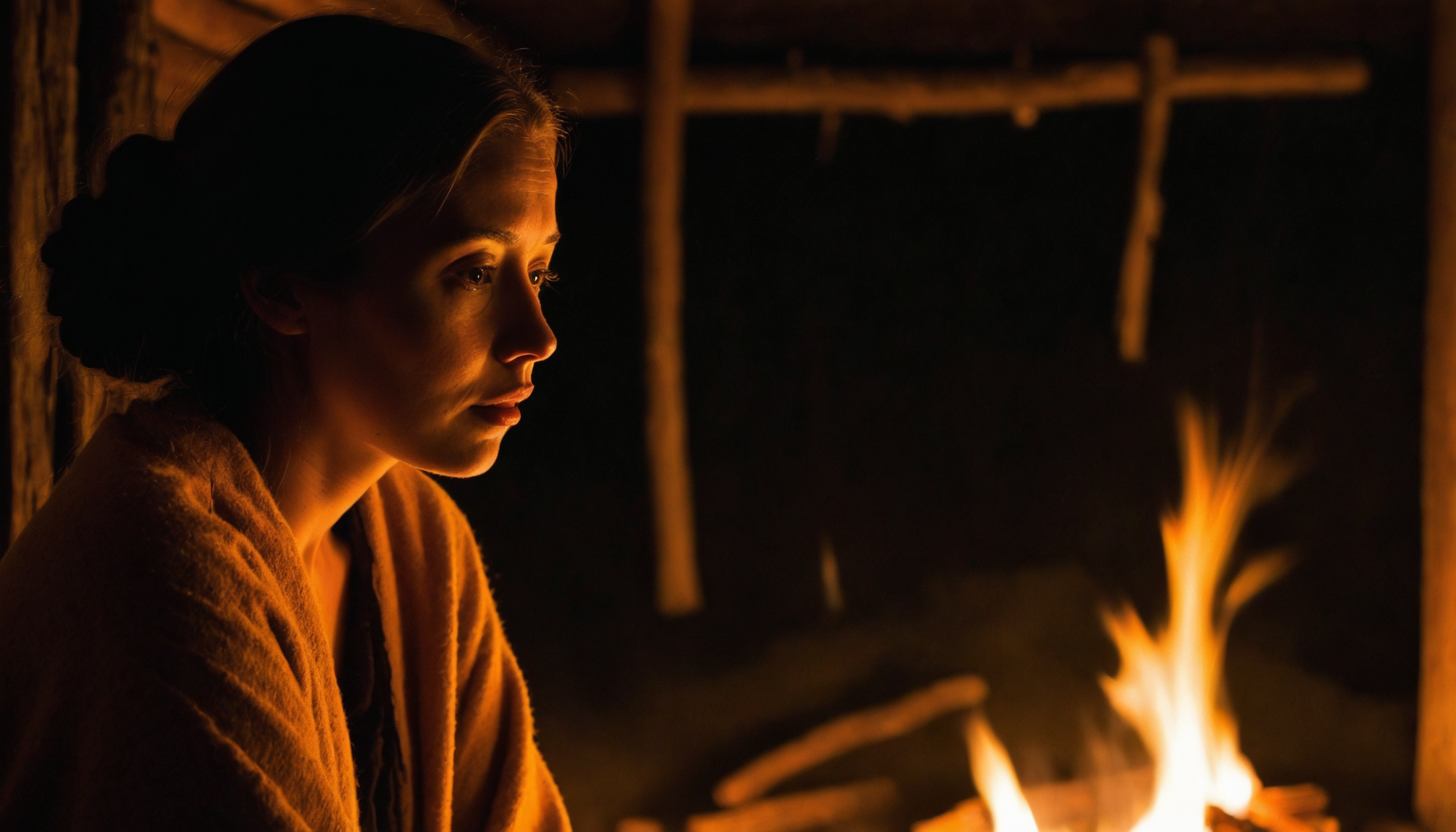
Ask a person in pre-Christian Scandinavia, sitting in a longhouse a thousand years before the word religion meant what it means to modern society, “Hey, what’s your religion?” and the question would fail to translate. Not because they lacked belief in gods, the dead, the land-spirits, or the turning of the year. They had all that in abundance. It would fail because you’d be asking them to hold up, name, and hand you a chosen thing that didn’t yet exist, let alone something separate from everything else that made up their life. You might as well ask a fish to describe what it thinks of water, or ask someone why they chose to breathe. What you might call “religion” was not a packaged, compartmentalized aspect of life, something a person chose to align with. Their spirituality was an understanding woven into the fabric of every aspect of living. What was believed was also how one lived, and how one moved through the world.
The concept that a person has a religion, a discrete, well-defined package of doctrines and affiliations they can inventory or swap out for a different version, is a surprisingly modern one. Scholars like Brent Nongbri, in Before Religion: A History of a Modern Concept (2013), have argued that “religion” as a bounded, separable category is itself a comparatively recent Western invention, one we now attempt to project backward onto civilizations who would not have recognized it. The word itself, from the Latin religio, once carried more the sense of obligation and scrupulous observance than of a chosen set of beliefs one could pick up and set down.
The Proto-Germanic people give us a clear window onto that older world, not because they were somehow special or unique, but because their case is vivid and the structure of their spirituality is still visible. So, I will use their society as a lens to showcase the claim I hope to make good on: religion is a verb that keeps getting mistaken for a noun. It is not the book, the label, or the doctrine frozen at the moment someone decided the current wording was final. It is an act. It is the reaching of finite people toward forces larger than themselves, and everything that follows, from the mead hall to the manuscript, is the story of how that act was carried, what changed when we learned to write it down, and what it has never stopped being.
Belief with no boundaries
It is worth making the “no boundaries” claim concrete. It’s easy to nod at in the abstract — that Norse belief was part of everyday life — while still quietly picturing a Norse version of church-on-Sunday: a special building, a set hour, a category of activity called “worship” kept separate from ordinary life. That picture does not fit the reality of what Norse spirituality was.
There was no separation between day-to-day activities and relating to the metaphysical world. The turning of the year was the liturgy: the great seasonal sacrifices; the blót at winter’s approach, at midwinter, at the start of the summer trading season. These were not appointments with the sacred set apart from the day-to-day work of living. They were the work of living, marking the same turns of weather and labor that a farming, seafaring people organized their whole existence around. Luck was poured from the same cup you drank from. The land-spirits, the landvættir, were acknowledged at the edge of the field before you plowed, not in a sanctuary you traveled to. An oath sworn on a sacred ring was, in the same motion, a binding legal act, because law and belief were not two systems but one. The chieftain who led the community, the goði, was priest and magistrate at once; presiding over the offering and presiding over the assembly were the same function, because they were not experienced as different things.
So when I say the person in the mead hall could not name their religion, I mean it precisely. The religion was living life. There was no boundary where “religion” stopped and “everything else” began. No thread could be pulled without the whole fabric of life unraveling. Where modern religion would carve out and label was, for them, simply life — a spiritually integrated existence.
The forces behind the faces
Begin with what these beliefs originally did. Take any god and strip it down to its fundamental functions and you find a prevailing, universal force underneath; something very real, very large, and in some ways difficult to conceptualize directly. The sea that gives fish and takes ships. The winter that must be survived. The harvest that will or will not come. Death, which arrives for everyone and explains itself to none. Luck, a maddening variable deciding whether the sea crossing or the childbirth goes well. Fertility, weather, the fragile order that keeps a community from tearing itself apart.
These forces are many, they are massive, often slow-moving, and too complex to hold in one’s hand and reason about plainly. So the human mind did what it is good at: it gave them faces, names, and personalities consistent with what they were perceived to embody. We personified. A storm becomes a temperament. The unpredictable becomes something to bargain with, honor, appease, or blame. This is not stupidity dressed as piety; it is a genuinely powerful cognitive move. Émile Durkheim, in The Elementary Forms of Religious Life (1912), saw religion partly as a society representing itself, and its known forces, back to itself in a form it could handle collectively. A named god is a compressed handle for a force otherwise beyond simple comprehension. You cannot negotiate with atmospheric pressure. You can pour out an offering to the one who governs the sea, and in doing so, you give yourself a way to stand in relation to a force that would otherwise simply loom.
And here is a subtlety that separates this posture from a merely transactional relationship, it will matter at the end. The Norse world had room for magic, for fate glimpsed and read, for gods and other beings experienced as sentient forces with wills of their own, and for a sense of one’s own small place alongside them. The offerings, the thanks, the small acts of communion were never contingent on proof that anything, or anyone, was listening. You did not pour out an offering to the sea only if you were certain the sea could receive it and bend to your wants. The gesture did not wait for confirmation. A force held sway over its domain; the sea over the crossing, the land over the harvest, the season over the whole shape of the year; and that sway alone made it worthy of acknowledgment and thanks, however the thanks was received. Reverence was owed to power. It is a remarkably mature stance to take. It treats the connection between a person and the forces that govern their life as real and binding regardless of whether those forces offer acknowledgment. You give thanks to what holds sway over you because acknowledging that sway is the honest posture toward a world larger than yourself, not because you are expecting receipts.
That is the original foundation of spirituality and the precursor to what became religion: a way of relating to the cosmos. Not an escape from the world but a way to interface with it. A set of faces laid over universal forces so that finite people could live alongside the infinite and the uncontrollable without being flattened by them.
The memory of a people
Relating to a force once is not enough. The understanding needed to travel from the one who grasped it to the child who had not yet, and to the grandchild after that. Here the pre-Christian world had no bookshelf, no written tradition to lean on. What it had was memory, and voice, and the long apprenticeship of listening.
This is where the tradition reveals its second nature: spirituality is a container. A storage-and-transmission technology for everything a people had learned about how to live, what the world was made of, and the forces that shaped it. Values, warnings, cosmology, practical wisdom, belief in the unseen, the hard-won rules of hospitality, honor, and restraint — all compressed into narrative, because narrative is what human memory holds best. We forget lists. We forget arguments. We remember stories, especially stories with shape, rhythm, and a hook.
The mechanics of this are not mystical. Walter Ong’s work on orality (Orality and Literacy, 1982) and Albert Lord’s study of oral epic (The Singer of Tales, 1960, building on the fieldwork of Milman Parry) show that the very features we might dismiss as decorative — meter, repetition, formula, the stock phrase — are in fact the error-correction code of a memory culture. Ong’s central observation was that in a culture without writing, you can only truly know what you can recall; so thought itself takes on shapes built for memory: rhythmic, patterned, formulaic.
You can see the same compression at the level of a single word. The Norse poets called the sea the “whale-road”, blood the “battle-sweat”, the sun the “sky-candle”. A kenning like this is a compact metaphor that folds a whole relationship into two words. The sea as a thing you travel, vast and alive beneath you; battle as labor, sweated through like any other hard work. The image carries the worldview, and it carries it in a form small enough to remember and vivid enough to make you want to. This is compression as a habit of the language itself, not only of the story: a people’s understanding pressed into phrases built to lodge in memory and survive retelling.
That is what myth and gnomic tradition were for. Not entertainment, though they entertained. Not doctrine, though they instructed. They were the memory of a people, written in ink that lasts without paper: the shape of a story you cannot forget.
The spoken word and the closed book
Now, the difference between two mediums of carrying a spiritual tradition.
I’ll start by clearing away a misconception. Oral traditions are frequently not loose or improvisational at all. They can be ferociously conservative. The very features just described as memory technology; the meter, the formula, the fixed phrase; often exist precisely to prevent drift, to hold the wording steady across generations so that nothing is lost. A culture without writing sometimes guards its exact wording more jealously than one that can always simply “go check the book”. The impulse to conserve is human and universal. What the oral condition removes is not that impulse but the external master copy against which all future deviation can be judged and condemned. Custom can hold the door for change shut, and it often did. It can, however, never lock it, because there is no text to lock it with.
And that unlockable door is the oral tradition’s quiet strength. Where there is no fixed page to check against, each telling can absorb what the teller, and the listener, have come to understand. A story retold is a story told through the lens of new experience; it can let new light in without ever committing the crime of “altering the sacred text”. There is only this telling, tonight, to these listeners who then carry it, measure it against their own lives, and pass it on, or not, to the listeners who follow. The oral tradition can breathe. It can bend. It can evolve with each telling.
One caution, though, before going further. When a tradition revises itself across generations, that does not mean it improves by default. Morality does not march steadily upward with each age wiser than the last. The change is closer to evolution in the biological sense. Change in response to conditions, without a guaranteed direction. Sometimes a tradition adapts toward greater mercy; sometimes it hardens under threat; sometimes it simply moves sideways, trading one emphasis for another. What matters is not whether a tradition can climb, but that it has the ability to move at all. That a living practice can hold that ebb and flow without the friction of formally amending something sacred, because it was never truly frozen in the first place.
That same openness, though, is also the oral tradition’s great weakness. What has no fixed copy can be lost entirely. A tradition that lives only in memory dies with the last person who remembers it, and a plague, a famine, a conquest, or a single broken generation of tellers can erase a thousand years of understanding in a lifetime. What breathes can also be smothered. What bends can be broken, or bent by a careless or self-serving hand until the original shape is gone and no one alive can say what it had once been. The spoken word holds nothing tightly which is both a gift and a curse. An oral tradition is alive, and like everything alive, it is mortal.
That fragility is exactly the weakness writing served to correct. Fix the words to a page and the fragility falls away. Nothing need be lost to a failing memory. The text outlives its keepers. The same words can reach a thousand distant communities at once, in the same order, saying the same thing. There is, at last, a master copy to return to across centuries. A way to say with confidence what was taught, and to catch the distortions that memory alone never could. Writing did for spirituality what a foundation does for a house. It let the thing stand without being held up. It is no accident that the traditions which learned to write are the ones whose words we can still read today.
But the remedy came with new afflictions of its own. The master copy that ends distortion also ends the flexibility. Fidelity, pushed far enough, hardens into rigidity. The permanence of a text held by several unquestioning generations can begin to mistake itself for absolute truth. The deepest change is not in the words but in what they now ask of the reader. A tradition fixed in ink, arriving as the final and unalterable word generations later, presents itself as fact. That is the whole difference between the two: an oral tradition asks to be heard; a written tradition, once the original spirit fades, insists it be obeyed.
Don’t get me wrong, this is not a hero-and-villain story. It is the story of two different ways to carry knowledge into the future, each of which can correct the other’s weakness. The oral tradition is alive yet fragile; the written tradition is enduring yet risks being mistaken for what it is not. Neither is “better”. But somewhere along the way, we forgot the foundational reason behind both.
What both traditions show religion is
Most of what survives from Proto-Germanic oral tradition was set to parchment by Christian hands centuries after the fact. People like Snorri Sturluson, who compiled the Prose Edda in the thirteenth century, are precisely why we can still see the structure where living, spoken belief was pressed into a book. What began as oral tradition found its place in fixed canon and codified doctrine, and from the inside the change must have felt like the fulfillment of a sacred duty. It was, in truth, a trade: permanence and reach, bought with the loss of the ability to evolve.
I have spent this essay drawing the two traditions apart, and the differences are real. But stand back far enough, look at both simply for their function, and the opposition begins to collapse into something more interesting. They both do the exact same thing, just in different ways — perceptible only through the lens of time.
Both are the work of finite people building an interface with forces too large to face head-on; one made of memory and spoken word, the other of ink and written canon. And there is an irony at the root of it that undoes the neat opposition entirely. The written tradition, for all its insistence on permanence, still refuses to stand still. Sacred and foundational texts across the world are translated and re-translated; the translations age and are renewed; wording is modernized as languages evolve; manuscripts differ and editors choose what stays and what goes. A text written in one century is read, and effectively rewritten, through the needs of the next. The living community keeps quietly updating what the fixed text “says”, while the fixed text continues to present itself as unchanged. The difference between the two was only ever a difference in how openly each tradition appears malleable at all.
And once you see that, the opposition resolves into something better. If the oral tradition’s gift is life and its curse is fragility, and the written tradition’s gift is permanence and its curse is rigidity, then the truest form of passing on one’s spiritual beliefs is not one or the other but the marriage of both: a hybrid durable enough to survive, and alive enough to keep growing. Written down so it is not lost, and still spoken, given permission to be questioned, re-said and revised, so it does not calcify into a museum piece with a congregation claiming that one snapshot in time is the indisputable truth.
Every living tradition reinterprets its fixed words in each generation, re-translates them, re-applies them, hears them anew. It simply does so half in the open and half without admitting it, even to itself. They are all still evolving while believing themselves unchanged.
Honesty would set them free.
This is what religion is, and what it is not. It is not the book, and it is not a label. It is not the doctrine frozen in the moment someone decided the current wording was final, or the box you have chosen for yourself. Those are what we have convinced ourselves religion is. What religion really is, what it was in the North before it had a name, and what it still remains, is the act itself. The reaching of finite people toward forces larger than themselves, the recognition that we are a small part of a reality much bigger than us, and the long, unfinished attempt to live rightly within an ecosystem of existence we only capture a glimpse of in our short lifetimes. It is the verb, not the noun.
My convictions
Here is the place where I step past what can be argued into what I personally believe. If both traditions are interfaces, the question that finally matters is what lies beyond them both. My conviction is that religion was always, and only, a way to relate to forces beyond our present ability to understand; perceived sentient cosmic realities woven into the fabric of the universe, which we are able, ever so slightly, to experience in ordinary lives if we remain open to them. I cannot prove that; no skald or scribe or scholar can. Whether anything truly waits on the other side, larger than us, older than our words — I leave, honestly, to you, and future generations to decide.
Grant me the “if”, though, for a moment. Recall how the old North gave its reverence. Thanks, offered to the forces of the world regardless of whether they could answer, honor owed to power itself and not to any receipt or acknowledgment. If there is something real on the far side of existence worthy of that reverence, then the most honest way to honor it is not to set our beliefs and understanding in stone and demand obedience to our finite understanding. It is to keep the words we use to explain it open. To keep re-saying, revising, and restructuring them as our glimpses sharpen and blur and sharpen again. A tradition that is certain in its own understanding has stopped listening. A living tradition, a curious tradition, is still turned toward the thing it reveres, still reaching, still willing to be corrected by what it learns, and wiser for its reflection. Reverence, done honestly, is a conversation that never ends.
I believe that the gods, spirits, and beings who move behind the sea and the season and the turning of the year would not ask us to dogmatically defend a timestamp of our understanding. I believe they would wish for us exactly what a living tradition has always offered; to be heard rather than obeyed, carried forward and made new by each generation that receives it. That the words we use to relate can be re-said, revised, and restructured, again and again, as we come to know one another and the world around us a little better. The traditions change because we change, and our reaching for better understanding has never once stopped, despite having written down what we understand. And I have come to believe that the reaching — kept open and alive — is the truest form reverence, religion, and spirituality can take, and the one most worthy of whatever it reaches toward.
← back to Lifestyle